The basics: the H2 molecule
What molecular hydrogen (H2) is
Molecular hydrogen is two hydrogen atoms joined by a single bond. It is colourless, odourless and the lightest of all gases. Since 2007 it has been studied as a factor that influences oxidative stress in cells.
Covers
Sources
2 studies in the cards below.
Session
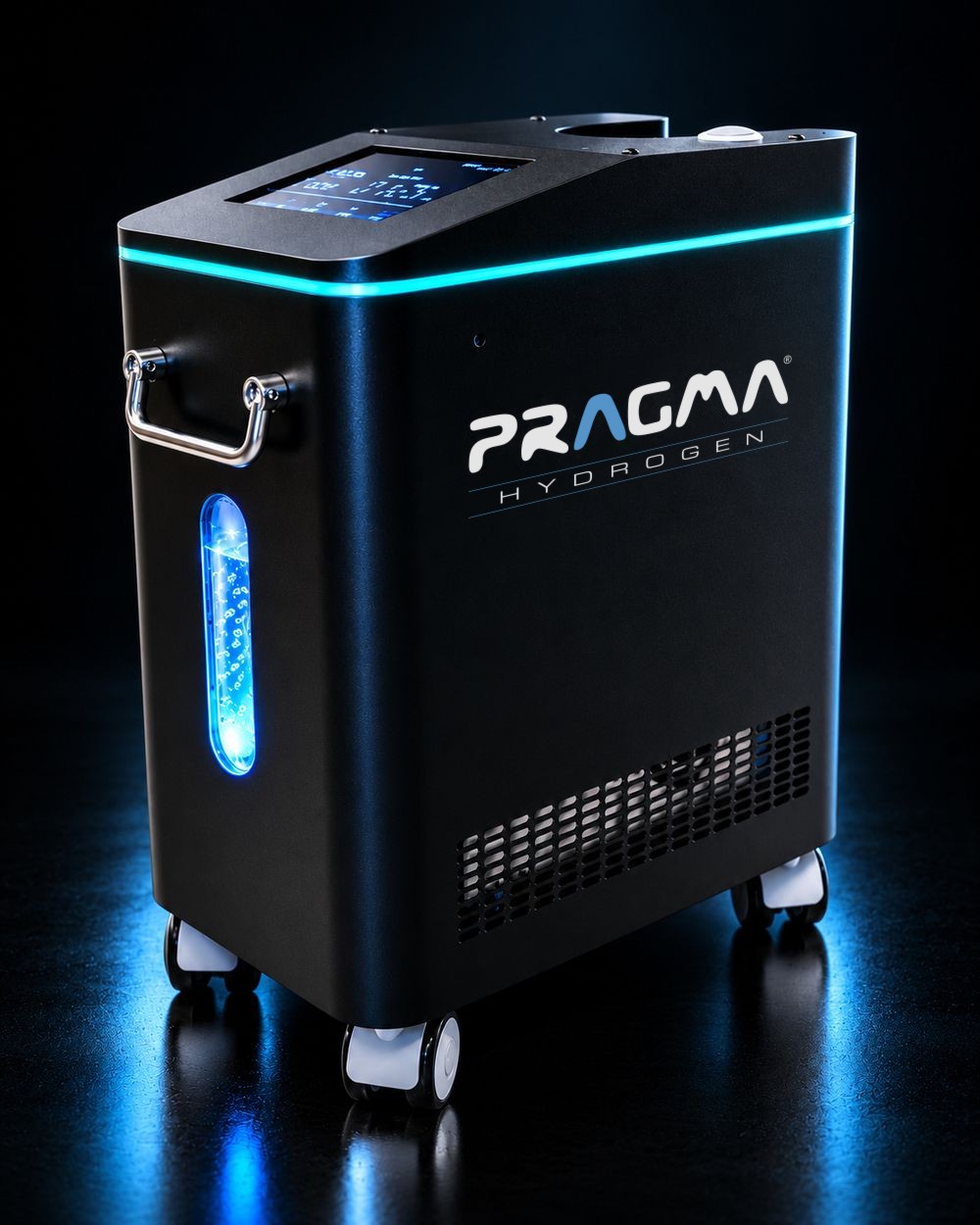
Inhalation from 30 minutes, at home, through a nasal cannula. See the PRAGMA HYDROGEN hydrogen generator
On this page
Molecular hydrogen: key facts
- The H2 molecule is small enough to pass freely through cell membranes.
- The body knows hydrogen: gut bacteria produce it, and we breathe some of it out.
- The open Hydrogen Studies database lists 2276 publications on hydrogen, including 348 human studies (as of 11.11.2026).
Molecular hydrogen: a small molecule that reaches the cells
The H2 molecule has a mass of 2 daltons. For comparison, oxygen has 32 and vitamin C 176. A molecule this small and electrically neutral dissolves in both water and fats, which is how it reaches the inside of cells and mitochondria.
Hydrogen is not a foreign substance to the body. Bacteria in the large bowel produce it when they ferment fibre. Some of it enters the blood and is breathed out, which is the basis of the hydrogen breath tests used in gastroenterology.
The history of molecular hydrogen: from diving to medicine
People breathed mixtures containing hydrogen long before any medical research: in deep-sea diving, mixtures of hydrogen, helium and oxygen were used. In 2007 the journal “Nature Medicine” described how hydrogen reacts selectively with the hydroxyl radical and peroxynitrite, the most reactive oxygen species. That paper opened a new line of research, and in the following years hydrogen entered clinical trials in Japan and China.
How molecular hydrogen works in the cell
At the concentrations used in studies, hydrogen is well tolerated and reacts selectively with the most aggressive radicals. A growing body of work indicates that its effect on the cell's signalling pathways is just as important, for example Nrf2, which switch on the cell's own antioxidant enzymes. In humans this is confirmed by measurements: after inhalation a marker of oxidative stress in the blood fell1.
A 2023 review counted 81 clinical trials in registries and 64 publications from human studies2. That is a lot for 16 years. For each topic we state on how many people and in what way something was studied. You can see six mechanisms in motion on the page How hydrogen works.
Molecular hydrogen: sources
Click an entry to see who took part in the study, how hydrogen was given and what the result was.
What the studies say
Selected scientific publications on molecular hydrogen in humans: a description of each study, its results and a link to the source.
1Raised indices of oxidative stress in the blood
randomised trialn = 37inhalation2024
Raised indices of oxidative stress in the blood
- Participants
- People with d-ROMs >350 U.CARR
- Protocol
- H2 inhalation; measurements immediately after the session and after 24 h
- Result
- In the inhalation group, a significant fall in the ROS/d-ROMs index was found after the session.
- Study context
- Randomised controlled trial. Participants: 37.
Chair M i wsp.. The impact of hydrogen inhalation therapy on blood reactive oxygen species levels: A randomized controlled study. Free radical biology & medicine 222: 601-606. 2024. PubMed 38996821 · DOI
2A review of clinical trials
review2023
A review of clinical trials
- Participants
- 81 trials from clinical registries and 64 publications from human studies
- Protocol
- A compilation of clinical trials of hydrogen by indication and route of administration
- Result
- The most frequently studied route of administration was inhalation, followed by hydrogen water and infusions.
- Study context
- A review of clinical trials.
Johnsen HM i wsp.. Molecular hydrogen therapy: a review on clinical studies and outcomes. Molecules 28(23): 7785. 2023. Source · DOI
Educational information, not medical advice. Full database of publications: Hydrogen Studies.
Hydrogen inhalation at home: a session with PRAGMA HYDROGEN step by step
Pour in distilled water
The device checks its quality and level itself. One session uses about 20–25 ml.
Put on the nasal cannula
A soft cannula, as in ordinary inhalation. The set includes two single cannulas and one double, for two people.
Set the time
From 30 minutes to 5 hours, in 30-minute steps. The panel shows the flow, hydrogen purity and the time remaining.
Breathe calmly
After about a minute the mixture is ready. You can read, work or rest. The device switches itself off.
Molecular hydrogen: frequently asked questions
Is molecular hydrogen the same as hydrogen peroxide?
No. Molecular hydrogen (H2) is a gas made of two hydrogen atoms. Hydrogen peroxide (H2O2) is a completely different substance with an oxidising action.
Since when has molecular hydrogen been studied?
Since 2007, when the journal “Nature Medicine” described how hydrogen reacts selectively with the most reactive oxygen species. A 2023 review counted 81 clinical trials in registries and 64 publications from human studies.
Is it a medical device?
No. PRAGMA HYDROGEN is a device for wellness use. It does not replace a consultation with a doctor.
How often should I use inhalation?
Studies most often used daily sessions lasting 30 to 60 minutes. The device lets you set the time from 30 minutes to 5 hours. Start with shorter sessions and see how you feel.
Is hydrogen inhalation safe?
In clinical trials, hydrogen inhalation was well tolerated. The generator has 8 safety features that stop it working if a fault occurs. Hydrogen is a flammable gas: do not smoke or use an open flame near the device. People with chronic conditions, pregnant women and children should consult a doctor before use.
Other guides
Try hydrogen for yourself.
Order the generator and see how it fits into your day.
PLN 17,990 gross (incl. VAT). 24-month warranty, user training included.