The history of research on molecular hydrogen
Japan and China: how hydrogen reached clinical trials
Modern research on hydrogen began in Japan. China has carried out the most clinical trials with a hydrogen-oxygen mixture and was the first to approve a device for such inhalation as a medical device.
Covers
Sources
6 studies in the cards below.
Session
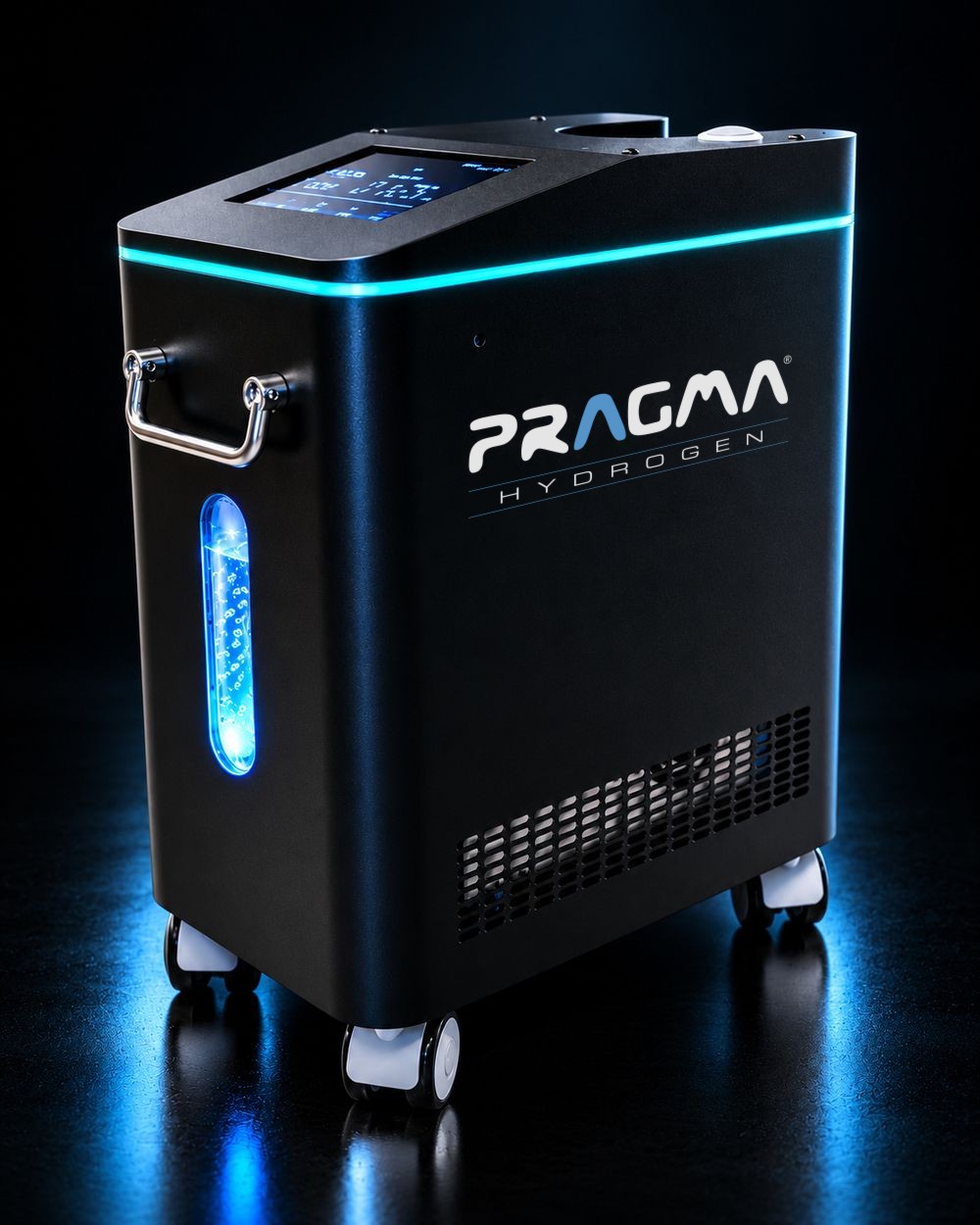
Inhalation from 30 minutes, at home, through a nasal cannula. See the PRAGMA HYDROGEN hydrogen generator
On this page
Hydrogen in Japan and China: key facts
- 2007: a team from Nippon Medical School publishes in “Nature Medicine”.
- 2016: Japan brings hydrogen inhalation after cardiac arrest under the Advanced Medical Care B scheme.
- 2020: China's regulator, the NMPA, issues a class III certificate for a hydrogen-oxygen generator with a nebuliser.
Hydrogen in Japan: from the laboratory to the intensive care unit
After the 2007 publication in “Nature Medicine”, which described the selective reaction of hydrogen with the most reactive radicals, Japanese teams turned to emergencies: heart attack, stroke and cardiac arrest. They used low, non-flammable concentrations of 1.3–3% from cylinders of ready-made mixture.
From 1 December 2016, inhalation of 2% hydrogen in people after cardiac arrest was carried out under the Advanced Medical Care B scheme, a pathway by which the ministry of health assesses new methods1. Its outcome was the HYBRID II trial at 15 hospitals2.
Hydrogen in China: a hydrogen-oxygen mixture
Chinese centres, including the team of Prof. Zhong Nanshan from Guangzhou, studied a mixture of 66.7% hydrogen and 33.3% oxygen from electrolytic generators. In 2020 a hydrogen-oxygen generator with a nebuliser received a class III medical device certificate in China. In March 2020 the mixture was included in the national COVID-19 treatment protocol as an option where it is available3.
In the following years Chinese teams published the clinical studies whose necessity commentators had pointed out4. The strongest of them is the multicentre double-blind trial in exacerbations of COPD5.
Hydrogen in Europe: wellness devices and the first trials
In the European Union, hydrogen generators for inhalation are today devices for wellness use, not medical devices. This also applies to PRAGMA HYDROGEN. The Chinese class III certificate was issued for a specific device made by a manufacturer there.
Europe is catching up: in 2026 a phase II clinical trial with inhaled hydrogen, run by the university hospital in Grenoble, was authorised in France.
Hydrogen in Japan and China: sources
Click an entry to see who took part in the study, how hydrogen was given and what the result was.
What the studies say
Selected scientific publications on molecular hydrogen in humans: a description of each study, its results and a link to the source.
1The status of hydrogen inhalation in Japan
reviewinhalation2020
The status of hydrogen inhalation in Japan
- Protocol
- A commentary on the path of hydrogen inhalation into clinical practice
- Result
- The author describes the inclusion of H2 inhalation after cardiac arrest in Japan's Advanced Medical Care B scheme. He states that below 4% hydrogen in the gas there is no risk of ignition.
- Study context
- Editorial.
Ohta S. Will the hydrogen therapy be approved shortly?. Annals of Translational Medicine 8(6): 264. 2020. Source · DOI
2Out-of-hospital cardiac arrest, post-resuscitation care
randomised trialn = 73inhalation2023
Out-of-hospital cardiac arrest, post-resuscitation care
- Participants
- 39 H2 and 34 control; comatose adults after cardiac arrest of cardiac cause; 15 hospitals in Japan
- Protocol
- 2% H2 added to oxygen for 18 hours in mechanically ventilated people; control: oxygen without H2
- Result
- Full function (mRS 0) after 90 days: 46% vs 21% (p=0.03). 90-day survival: 85% vs 61% (p=0.02).
- Study context
- RCT, 15 centres, double-blind. Participants: 73.
Tamura T i wsp.. Efficacy of inhaled hydrogen on neurological outcome following brain ischaemia during post-cardiac arrest care (HYBRID II): a multi-centre, randomised, double-blind, placebo-controlled trial. EClinicalMedicine 58: 101907. 2023. PubMed 36969346 · DOI · Full text
3COVID-19, a discussion of the guidelines
reviewinhalation2020
COVID-19, a discussion of the guidelines
- Protocol
- A discussion of the seventh version of the Chinese protocol for the diagnosis and treatment of COVID-19 (March 2020)
- Result
- The protocol permits breathing a mixture of 66.6% hydrogen and 33.3% oxygen where it is available.
- Study context
- Discussion of guidelines.
Zhao JY i wsp.. Interpretations of "Diagnosis and Treatment Protocol for Novel Coronavirus Pneumonia (Trial Version 7)". Chinese Medical Journal, 2020. 2020. PubMed 32301757 · Full text
4COVID-19, a commentary on the recommendations
reviewinhalation2020
COVID-19, a commentary on the recommendations
- Protocol
- A commentary on the Chinese recommendations permitting a mixture of 66.6% H2 and 33.3% O2 as part of oxygen therapy in COVID-19
- Result
- The author notes the inclusion of the hydrogen-oxygen mixture in official recommendations in China.
- Study context
- Letter to the editor.
Ostojic SM. COVID-19 and molecular hydrogen inhalation. Therapeutic Advances in Respiratory Disease 14: 1753466620951051. 2020. Source · DOI
5Exacerbation of COPD
randomised trialn = 107inhalation2021
Exacerbation of COPD
- Participants
- 108 randomised; 107 in the full analysis set
- Protocol
- H2/O2 2:1 vs oxygen for 7 days, alongside standard treatment
- Result
- BCSS fell by 5.3 vs 2.4 points; adjusted difference −2.75 points (95% CI −3.27 to −2.22). CAT score: −11 vs −6 points (p<0.001).
- Study context
- RCT, 10 centres, double-blind. Participants: 107.
Zheng ZG i wsp.. Hydrogen/oxygen therapy for the treatment of an acute exacerbation of chronic obstructive pulmonary disease: results of a multicenter, randomized, double-blind, parallel-group controlled trial. Respiratory research 22(1): 149. 2021. PubMed 33985501 · DOI · Full text
6Cardiac arrest, the first pilot study in humans
no control groupn = 5inhalation2016
Cardiac arrest, the first pilot study in humans
- Participants
- 5 comatose people after out-of-hospital cardiac arrest; Tokyo
- Protocol
- 2% H2 added to the breathing gas for 18 hours, alongside controlled body temperature
- Result
- No adverse effects attributed to the inhalation were recorded. 4 of 5 people survived 90 days with a favourable neurological outcome.
- Study context
- Open-label pilot study without a control group. Participants: 5.
Tamura T i wsp.. Feasibility and safety of hydrogen gas inhalation for post-cardiac arrest syndrome: first-in-human pilot study. Circulation Journal 80(8): 1870-1873. 2016. PubMed 27334126 · DOI
Educational information, not medical advice. Full database of publications: Hydrogen Studies.
Hydrogen inhalation at home: a session with PRAGMA HYDROGEN step by step
Pour in distilled water
The device checks its quality and level itself. One session uses about 20–25 ml.
Put on the nasal cannula
A soft cannula, as in ordinary inhalation. The set includes two single cannulas and one double, for two people.
Set the time
From 30 minutes to 5 hours, in 30-minute steps. The panel shows the flow, hydrogen purity and the time remaining.
Breathe calmly
After about a minute the mixture is ready. You can read, work or rest. The device switches itself off.
Hydrogen in Japan and China: frequently asked questions
What was registered in China in 2020?
In 2020 the Chinese regulator NMPA registered the first generator of a hydrogen-oxygen mixture as a class III medical device. In the same year, inhalation of a hydrogen-oxygen mixture in a 2:1 ratio was included in China's official COVID-19 management guidelines. PRAGMA HYDROGEN is a device for wellness use.
Where did modern hydrogen research begin?
With a 2007 publication in “Nature Medicine” by a team from Nippon Medical School, which described the selective reaction of hydrogen with the most reactive radicals. Japanese teams then began studying hydrogen in emergencies: heart attack, stroke and cardiac arrest.
Is it a medical device?
No. PRAGMA HYDROGEN is a device for wellness use. It does not replace a consultation with a doctor.
How often should I use inhalation?
Studies most often used daily sessions lasting 30 to 60 minutes. The device lets you set the time from 30 minutes to 5 hours. Start with shorter sessions and see how you feel.
Is hydrogen inhalation safe?
In clinical trials, hydrogen inhalation was well tolerated. The generator has 8 safety features that stop it working if a fault occurs. Hydrogen is a flammable gas: do not smoke or use an open flame near the device. People with chronic conditions, pregnant women and children should consult a doctor before use.
Other guides
Try hydrogen for yourself.
Order the generator and see how it fits into your day.
PLN 17,990 gross (incl. VAT). 24-month warranty, user training included.