
Publication in “Nature Medicine”
The team of Prof. Shigeo Ohta shows that hydrogen selectively neutralises the most dangerous free radicals. Modern research begins with this paper.
The simplest molecule in the Universe: two protons, two electrons. That is why it gets where nothing else can.
Step 1 of 6
The hydrogen-oxygen mixture flows from the generator through a nasal cannula. You breathe normally, and the gas travels with the air through the trachea and bronchi deep into the lungs.
The bronchi end in air sacs (alveoli) about 0.2 mm across. Each is wrapped in capillaries, and the wall between air and blood is thinner than one micrometre. Hydrogen passes through it into the blood: in people breathing hydrogen, its concentration in the blood rose within minutes.
The blood carries hydrogen around the body. From a capillary it enters cells and, as a small, electrically neutral molecule, spreads freely through their interior. The larger structures in the picture are the nucleus and the mitochondria.
The membrane is about 5 nanometres thick and is a barrier to most substances. Hydrogen weighs 2 daltons and has no charge, so it slips between the molecules of the membrane without the help of a transporter. Vitamin C is 88 times heavier.
Two protons 74 picometres apart and a shared pair of electrons. It is the smallest and lightest molecule there is. Since the first step, the image has been magnified more than two billion times.
Hydrogen does not build up in the body. During inhalation its concentration in the blood rises for about 20 minutes and then levels off, and after a session it falls to one tenth within a few to a dozen or so minutes. The excess leaves the body with the air you breathe out.
Hydrogen concentration in the blood: Ono et al., Medical Gas Research 2012. The sizes of the structures are textbook values, and the proportions within each frame are simplified. Drag the image to rotate it.
A molecule this small passes through cell membranes without a transporter. The diameters of the circles correspond to the cube root of the mass.
The mechanisms of action of hydrogen have been described in laboratory studies, and human studies have recorded, among other things, lower markers of oxidative stress and inflammation.
Human studies we cite in describing the mechanisms: Ono et al. 2012, Chair et al. 2024, Zhao et al. 2024, Zhang et al. 2025, Lin et al. 2022, Xiao et al. 2026, Grepl et al. 2025.
Gut bacteria produce hydrogen when they ferment fibre. This was described as early as 1969 in the “New England Journal of Medicine”, and a 2025 paper in “Nature Microbiology” showed that the enzyme responsible for the process is common in healthy people. Inhalation delivers the same molecule in a known, repeatable amount.
During inhalation, hydrogen appears in the blood within minutes, and the excess leaves the body in exhaled air. In studies with hydrogen inhalation the authors observed a fall in markers of oxidative stress in the blood and, in some studies, also lower inflammation markers CRP and IL-6. On this site we refer only to studies in humans.
The number of papers on molecular hydrogen grows year after year. Most come from East Asia.
| Year | Publications |
|---|---|
| 2007 | 7 |
| 2008 | 13 |
| 2009 | 24 |
| 2010 | 49 |
| 2011 | 82 |
| 2012 | 94 |
| 2013 | 84 |
| 2014 | 83 |
| 2015 | 111 |
| 2016 | 87 |
| 2017 | 116 |
| 2018 | 125 |
| 2019 | 129 |
| 2020 | 169 |
| 2021 | 149 |
| 2022 | 111 |
| 2023 | 120 |
| 2024 | 142 |
| 2025 | 214 |
| 2026* | 208 |
Chinese pulmonologists led by Prof. Zhong Nanshan carried out studies of a hydrogen-oxygen mixture in COPD and COVID-19. In Japan, hydrogen is studied by emergency and cardiology departments.
The team of Prof. Shigeo Ohta shows that hydrogen selectively neutralises the most dangerous free radicals. Modern research begins with this paper.
Standard GB 31633-2014, which describes hydrogen as a food additive, comes into force.
From 2016 to 2022 the Japanese health ministry included 2% hydrogen inhalation after cardiac arrest in its advanced medical care programme (category B). The HYBRID II trial was conducted during that time.
The first generator of a hydrogen-oxygen mixture registered as a class III medical device. In the same year, inhalation of a hydrogen-oxygen mixture in a 2:1 ratio was included in China's official COVID-19 management guidelines.
108 people in 10 centres, double-blind. The authors observed a greater fall in the severity of exacerbation symptoms with a 2:1 hydrogen-oxygen mixture than with oxygen alone.
A trial in 15 hospitals with 73 people after cardiac arrest. 46% of those breathing hydrogen made a full functional recovery, versus 21% in the control group. Survival at 90 days: 85% versus 61%.
In February 2026 the university hospital in Grenoble received approval for a phase II trial of hydrogen inhalation after atrial fibrillation ablation (EU Clinical Trials Register, EU CT 2024-520131-33-00).
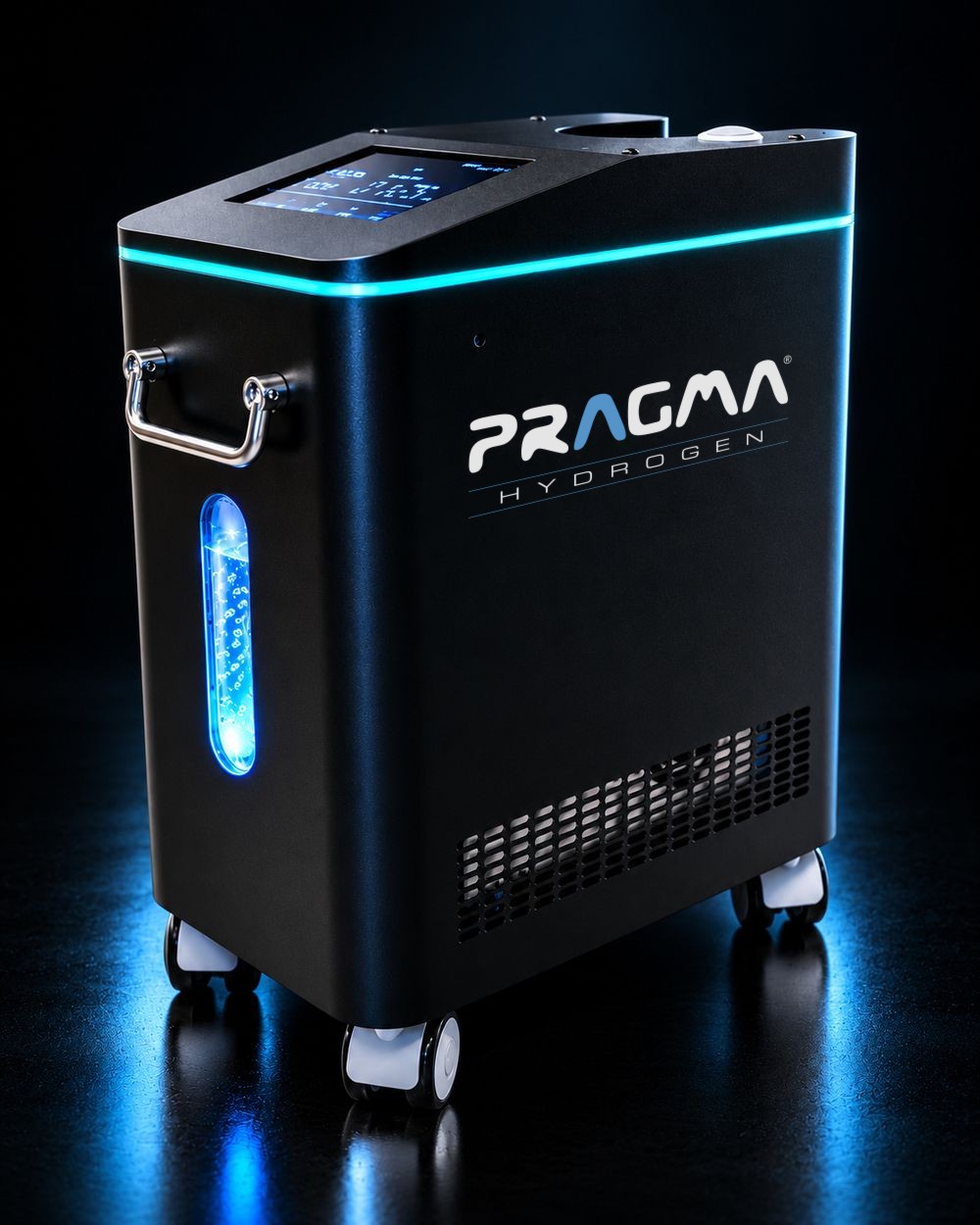
A daily inhalation session at home: a moment of relaxation and recovery after exercise. You can buy the generator.
PLN 17,990 gross (incl. VAT). 24-month warranty, user training included.
Cookie settings
Choose which cookies you agree to. Necessary cookies are always on because the website does not work without them. We use the others only with your consent, which you can change or withdraw at any time.
Necessary
Needed for the website to work and to remember your cookie choice. They cannot be switched off.
Preferences
Remember your settings and allow content from other services, such as maps, to be shown.
This website currently uses no cookies in this category.
Statistics
Help us understand how you use the website, e.g. which pages are visited most often.
Marketing
Used to show relevant ads and measure their effectiveness, also on other websites and social media.
This website currently uses no cookies in this category.